
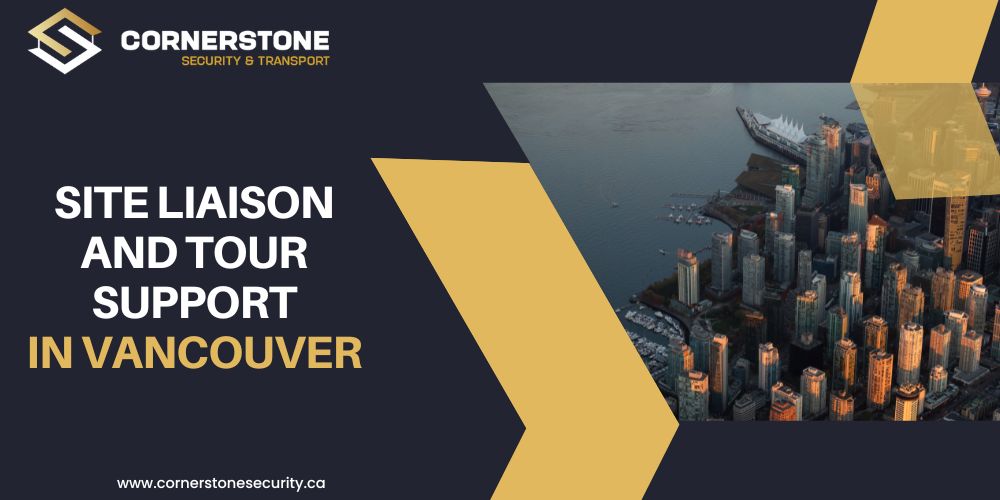
A site liaison is the security lead on the ground who connects the dots between the venue, the production team, and the protection detail. In a tour support context, that role is the difference between a schedule that stays tight and a night that gets dragged into public friction.
This is not “more guards.” It is coordination with authority. The site liaison sets the access plan, confirms who is cleared and where, and makes sure the right entrances, corridors, and rooms stay controlled as the venue fills up. When timing shifts, they adjust the plan so the artist, principal, or group is not left waiting in lobbies, hallways, or lineups.
In Vancouver, that matters because the pressure points are predictable. Busy load-ins, mixed credentials, crowded back-of-house corridors, elevators that bottleneck, and last-minute changes that can leave you exposed. Tour support is built to remove those surprises before they show up. The client should feel supported by structure, not managed by security.
What Tour Support Actually Includes
Tour support is where site liaison work becomes a repeatable program. The job is to keep movement, access, and timing predictable across a venue that is changing by the minute.
It starts with access discipline. Who is cleared, what credentials mean, and which areas are truly restricted. Backstage stays controlled because the rules are simple and consistently enforced, not because the team is aggressive.
It also includes movement planning inside the venue. The site liaison identifies the routes that keep talent out of high-traffic areas and away from unnecessary cameras. If a green room shifts, if a hallway gets crowded, or if an elevator becomes a choke point, there is already a clean alternative.
The venue team matters here. The site liaison coordinates with venue ops, stage management, and the promoter rep so security is not competing with the show. When everyone shares the same plan, you don’t get last minute scrambling at doors, lost staff, or miscommunication at the worst possible moment.
Time management is the other half of the role. Arrivals, soundcheck movement, meet-and-greet windows, and post-show exits are treated as the most exposed moments of the night. The site liaison reduces public waiting by aligning those transitions with when spaces are ready and when staff are in position.
If plans change, the response should be subtle. A reroute looks like normal movement. A delayed exit looks intentional. The client experiences continuity, not friction.
What You Should Expect When It’s Done Properly
When site liaison and tour support are run correctly, the night feels smooth without feeling controlled.
The venue is ready before the client arrives. Staff know who is cleared, private areas stay private, and movements are confirmed so there is no curbside confusion or hallway improvisation.
The backstage runs cleaner. Credentials are respected, access points are managed consistently, and the flow between vehicle, green room, stage, and exit is protected without turning the back-of-house into a vault.
Timing stays intact. Entrances and exits happen on schedule, meet-and-greet windows don’t spill into public spaces, and transitions are aligned so the client is not waiting in exposed areas while someone “checks on something.” If the environment shifts, the adjustment is seamless.
That is the value of tour support. It keeps the show on track, protects privacy, and prevents small mistakes from becoming visible problems. If you are bringing talent, executives, or a high-profile group into Vancouver and you want the venue piece handled properly, start with a short call and a real schedule. A good site liaison can pressure-test the plan quickly and show you where the friction will appear before doors open.