
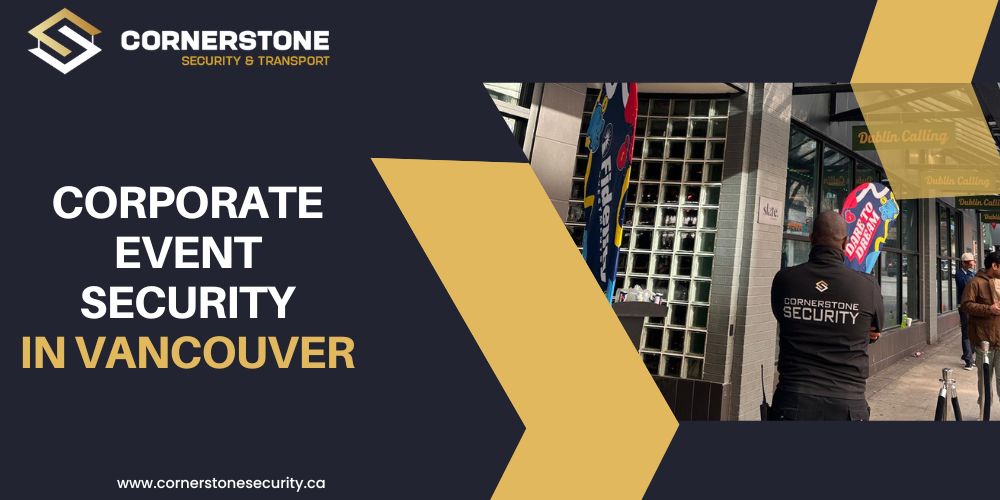
Planning a corporate event in Vancouver comes with a long list of responsibilities and security is often one of the least understood. Not because it’s unimportant, but because many event managers are expected to handle it without formal training.
Yes, security is about safety. But it’s also about flow, experience, and ensuring everything runs exactly as intended—without disruption.
This guide breaks down how to approach corporate event security in a way that’s practical, structured, and aligned with how experienced teams actually operate on the ground.
Step 1: Define the Risk Profile of Your Event
Every event carries a different level of risk, and understanding that early shapes every decision that follows.
Start with the basics: how many people are attending, who those people are, and how visible the event will be. A private executive dinner with ten guests requires a completely different approach than a 500-person conference in downtown Vancouver.
But numbers only tell part of the story.
The real consideration is who is in the room. Are there senior executives, public figures, or high-net-worth individuals attending? Is there media presence? Is the event tied to an announcement, investment, or sensitive business activity?
Visibility matters just as much as size. An event that attracts public attention—whether through branding, location, or guest list—naturally carries a higher level of unpredictability.
Defining this risk profile isn’t about overreacting. It’s about being realistic. Because once you understand the environment you’re operating in, the rest of your planning becomes clear and intentional.
Step 2: Choose the Right Security Model
One of the most common misconceptions is that event security simply means placing guards at entrances.
Sometimes that’s enough. Often, it’s not.
There are generally three approaches: traditional event security, close protection, and a hybrid model.
Traditional event security focuses on access control—checking credentials, managing entry points, and maintaining a visible presence. It works well for structured environments where risks are predictable.
Close protection, on the other hand, is more personal and more dynamic. It’s designed for individuals rather than crowds. This approach becomes relevant when you have executives, keynote speakers, or VIP guests who require discreet, continuous coverage throughout the event.
In many corporate settings, the most effective solution is a hybrid model. This allows you to maintain overall event control while also providing tailored protection where it’s needed.
The key is not to overcomplicate—but also not to oversimplify.
The right model should match the tone of your event. It should feel appropriate, not excessive, and it should integrate naturally into the environment rather than stand apart from it.
Step 3: Conduct a Venue Assessment
A venue might look perfect from a design and logistics standpoint—but security requires a different lens.
Every space has its own flow, its own vulnerabilities, and its own constraints.
Start with entrances and exits. How many are there? Which ones are public, and which can be controlled? Are there service entrances that need monitoring? These details matter because they define how people move in and out of the space.
Then consider internal layout. Where are the natural gathering points? Are there bottlenecks where crowding could occur? Where are VIP areas located, and how accessible are they?
In a city like Vancouver, venue context also plays a role. Downtown locations, waterfront properties, and high-traffic areas each come with their own considerations—whether it’s pedestrian flow, nearby events, or general public visibility.
This is why experienced teams don’t rely on floor plans alone. They walk the space. They observe timing, access, and real-world conditions.
Because what looks straightforward on paper often changes once the event is live.
Step 4: Plan Guest Movement and Logistics
Security isn’t just about where people are—it’s about how they move.
Arrivals, transitions, and departures are often the most sensitive moments of any event. They’re also the points where planning—or lack of it—becomes most visible.
Start with arrivals. How are guests getting to the venue? Is there a clear drop-off area? Will there be congestion at certain times? For VIP guests, are arrivals staggered or coordinated?
Inside the event, movement should feel natural but intentional. Guests shouldn’t feel restricted, but there should always be a clear understanding of where they can and cannot go.
Departures require just as much attention. Events don’t end all at once—people leave in waves, and that creates its own dynamics. Without planning, this can lead to confusion, delays, or unnecessary exposure.
For higher-profile attendees, secure transportation becomes part of the equation. Timing, routing, and coordination all need to be aligned with the event schedule.
When done properly, none of this is noticeable. Guests simply experience a smooth, well-organized event. But behind the scenes, every movement has been considered.
Step 5: Work with a Security Partner, Not Just a Vendor
This is where the difference really shows.
A vendor shows up on the day of the event and follows instructions. A partner is involved before the plan is even finalized.
In corporate event environments, that distinction matters.
Security decisions affect logistics, timing, guest experience, and even how the event is perceived. Treating security as an afterthought—or a last-minute addition—limits what’s possible.
At Cornerstone Security & Transport, the approach is simple: security is part of the overall event strategy, not separate from it.
That means being involved early. Understanding the purpose of the event, the expectations of the client, and the dynamics of the venue. It also means coordinating with planners, venues, and other vendors to ensure everything works together.
This is where the concierge-level model comes into play.
It’s not just about coverage—it’s about integration. Secure transport, close protection, and event security are aligned into one cohesive plan. The result is an environment where everything feels seamless, professional, and controlled without being restrictive.
And ultimately, that’s the goal.
Not just to keep people safe, but to create a space where clients and guests can focus on what they’re there for, without distraction.
Planning Corporate Event Security in Vancouver with Confidence
Corporate Event Security in Vancouver doesn’t need to be complicated, but it does need to be intentional.
When you define the risk, choose the right approach, understand your venue, and plan movement properly, security becomes part of the experience—not a barrier to it.
And when you work with a team that understands both protection and logistics, everything comes together in a way that feels effortless.
If you’re planning an upcoming event and want a structured, professional approach to security, Cornerstone Security & Transport is here to help.
Book a call today to discuss your event and build a plan that works from the ground up.