
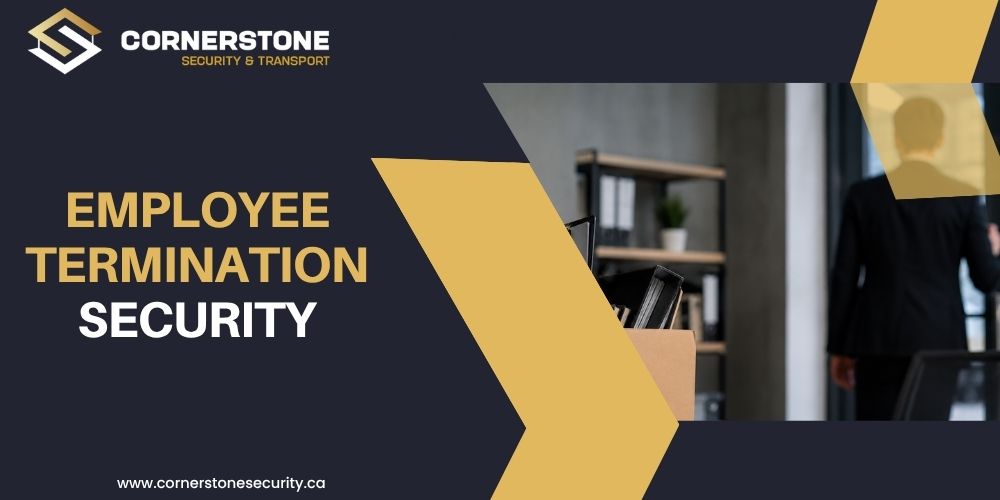
Ending an employment relationship is one of the most challenging responsibilities any business faces. Whether the decision is driven by performance concerns, organizational restructuring, policy violations, or changing business needs, employee terminations require thoughtful planning and professional execution. While most departures are handled respectfully and conclude without issue, employers should never overlook the importance of security during the process.
At Cornerstone Security & Transport, we understand that employee termination security is about much more than having a security guard nearby. It is about protecting people, safeguarding company property, securing confidential information, and ensuring the workplace remains safe and productive before, during, and after a difficult conversation. Businesses throughout Vancouver trust us to help create secure environments where sensitive situations can be managed calmly, professionally, and with respect for everyone involved.
A termination meeting should never feel confrontational, nor should it create unnecessary fear among employees. Instead, it should be part of a carefully coordinated process that allows the organization to move forward while preserving the dignity of the departing employee. By combining strong human resources practices with effective security planning, businesses can significantly reduce risk while demonstrating professionalism and compassion.
Why Employee Termination Security Matters
Many employers naturally focus on the legal and human resources aspects of terminating an employee. Documentation must be complete, employment standards must be followed, and managers must communicate the decision clearly. These are all essential steps, but they represent only one part of a successful termination process.
Security often becomes an afterthought because the overwhelming majority of employee terminations end peacefully. However, businesses cannot base their planning solely on the expectation that every situation will unfold exactly as intended. Even employees with excellent work histories may react emotionally when they unexpectedly lose their job. Feelings of frustration, embarrassment, anger, or uncertainty can influence behaviour in unpredictable ways.
The goal of employee termination security is not to assume the worst about people. Rather, it is to recognize that stressful situations deserve thoughtful preparation. A well-developed security plan protects everyone involved, including the departing employee, remaining staff, customers, visitors, and the business itself. It also helps prevent situations where emotions escalate because managers are forced to make important decisions in the moment instead of following a prepared plan.
For organizations that handle terminations professionally, security becomes part of a seamless process rather than an obvious presence. Employees often do not even realize that additional precautions have been taken because the entire experience appears calm, organized, and respectful.
Looking Beyond Physical Security
When people think about workplace security, they often picture someone standing at a front entrance or monitoring surveillance cameras. Today’s workplaces require a much broader approach.
Employees may have access to customer databases, financial records, cloud storage, proprietary software, confidential contracts, inventory systems, intellectual property, company vehicles, restricted work areas, and mobile devices. A termination affects every one of these access points.
Consider an employee who has managed customer accounts for several years. They may have login credentials for multiple software platforms, remote access to internal systems, keys to storage rooms, security codes, and company-issued electronics. If these access points remain active after employment ends, they create unnecessary vulnerabilities for the organization.
This is why employee termination security requires collaboration between several departments. Human resources, management, information technology, facilities personnel, and security professionals each play an important role. When everyone works from the same plan, there is far less chance that an important detail will be overlooked.
Preparation Makes the Difference
Successful employee terminations rarely happen because someone simply schedules a meeting and delivers the news. They happen because every detail has been carefully considered beforehand.
Preparation begins with evaluating the circumstances surrounding the termination. Not every employee presents the same level of risk, and every situation should be assessed individually. Factors such as previous disciplinary issues, access to sensitive information, workplace conflicts, emotional behaviour, or prior threats should all be considered when determining the appropriate level of security.
Once the organization understands the circumstances, planning can begin. Managers should know exactly who will attend the meeting, where it will take place, how company property will be collected, and when digital access will be disabled. Reception staff may need to be informed discreetly, while information technology personnel should be ready to remove system access at the appropriate time.
This coordinated approach reduces uncertainty for everyone involved. Instead of making decisions under pressure, the organization follows a structured process that has already been discussed and approved.
Choosing the Right Environment
The setting of a termination meeting can influence how the conversation unfolds.
Privacy should always be a priority. Delivering difficult news in a busy office or within earshot of other employees creates unnecessary embarrassment and can increase emotional stress. A quiet meeting room provides a professional environment where both parties can speak openly without distractions.
Timing is equally important. Many organizations schedule termination meetings at times that minimize disruption to the workplace while allowing the employee to leave discreetly. Although there is no universal rule regarding the best time of day, employers should consider how the timing affects both the departing employee and the rest of the organization.
Small details also matter. Managers should ensure there are no unnecessary interruptions during the meeting, and they should allow sufficient time for questions regarding final pay, benefits, company property, or next steps. Rushing the conversation often creates additional frustration.
Throughout the meeting, communication should remain respectful and professional. Even when termination results from misconduct or policy violations, treating the individual with dignity reflects positively on the organization and often helps reduce emotional tension.
Protecting Company Data During Employee Offboarding
Modern businesses depend heavily on digital information, making cybersecurity one of the most critical components of employee termination security.
Many employees have accumulated access to numerous systems throughout their careers. They may log into accounting platforms, customer relationship management software, cloud storage services, scheduling applications, internal messaging platforms, payroll systems, project management tools, and remote networks. In some organizations, employees also possess administrative privileges that allow them to modify sensitive information or grant access to others.
Waiting until the end of the day to remove these permissions can expose the business to unnecessary risk. Instead, information technology teams should coordinate with management so that access is disabled immediately following the termination meeting or, when appropriate, simultaneously as the meeting begins.
This process should include more than simply disabling an email account. Organizations should review every digital platform the employee has accessed, including shared passwords, mobile authentication devices, software licenses, company phones, cloud applications, and external vendor accounts. A thorough review ensures that no forgotten login credentials remain active after employment has ended.
Data protection also extends to confidential documents stored on company laptops, removable drives, or printed files. Recovering these materials promptly helps maintain the integrity of sensitive business information while supporting compliance with privacy obligations.
Securing Physical Assets
Physical security remains just as important as digital security.
Many employees accumulate access to buildings, vehicles, equipment, and restricted areas throughout their employment. Company keys, identification cards, parking passes, alarm codes, storage units, specialized tools, and access fobs should all be accounted for during the offboarding process.
Recovering these items is not about questioning an employee’s integrity. It is simply good business practice. Clear procedures reduce confusion while ensuring that valuable assets remain protected.
In situations where equipment cannot be returned immediately, employers should establish a documented plan outlining when and how company property will be collected. Maintaining accurate records also helps avoid misunderstandings later.
Businesses should remember that access extends beyond the main office. Employees may possess keys to warehouses, job sites, fleet vehicles, temporary work locations, or off-site storage facilities. Reviewing every location where access has been granted helps prevent security gaps that could otherwise be overlooked.
When Professional Security Support Is Appropriate
Many employee terminations proceed smoothly without requiring any visible security presence. However, certain situations justify additional precautions.
At Cornerstone Security & Transport, we often work with businesses that simply want reassurance during particularly sensitive terminations. In these situations, our officers provide a calm, professional presence while allowing managers and human resources personnel to conduct the conversation without distraction.
Professional security may be appropriate when an employee has displayed aggressive behaviour in the past, has made concerning statements, is being terminated following a serious investigation, or has access to valuable assets or sensitive information. Security may also be beneficial in workplaces where emotions are already running high because of layoffs, restructuring, or labour disputes.
Importantly, our role is never to intimidate employees or create an uncomfortable atmosphere. Experienced security professionals understand that discretion is often the most effective approach. In many cases, our officers remain nearby but out of sight, ready to assist only if circumstances require intervention. Their presence allows management to focus on communication while knowing there is a plan in place should the situation change unexpectedly.
Employee termination security is not about expecting conflict. It is about ensuring that everyone can safely return to their normal responsibilities once the meeting has concluded.
Creating a Culture of Respect
One of the most overlooked aspects of employee termination security is organizational culture. Businesses that consistently treat employees with fairness, transparency, and professionalism throughout their employment often experience smoother departures when difficult decisions become necessary.
Respect should not begin on the day of termination. It should be reflected in regular performance discussions, consistent policy enforcement, honest communication, and opportunities for improvement. When employees understand expectations and trust leadership, difficult conversations are less likely to feel unexpected or unfair.
This same philosophy applies during the termination process itself. Allowing employees to ask questions, explaining next steps clearly, and handling personal belongings respectfully demonstrates that the organization values professionalism even during challenging moments.
At Cornerstone Security & Transport, we believe that effective security and respectful treatment work hand in hand. Protecting people does not mean creating barriers between employers and employees. It means creating an environment where difficult situations can be managed safely, professionally, and with dignity.
Final Thoughts
Employee terminations will never be easy, but they can be managed with professionalism, preparation, and respect. By considering both human resources and security from the beginning, organizations can protect their employees, preserve business continuity, and reduce unnecessary risks to property and sensitive information.
Every workplace is different, which is why there is no universal approach to employee termination security. Some situations require only a well-planned offboarding process, while others benefit from the added reassurance of experienced security professionals. The key is recognizing the unique circumstances of each termination and preparing accordingly.
At Cornerstone Security & Transport, we help Vancouver businesses navigate sensitive workplace situations with confidence. From discreet employee termination security to ongoing corporate security solutions, our experienced team works alongside employers to create safer workplaces while maintaining the professionalism and respect every employee deserves. When people, property, and data need protection, thoughtful planning and experienced security support makes all the difference.